
Cold brew and iced coffee may arrive in identical glasses, but the similarity mostly ends with the ice. One is extracted slowly with cool water. The other is brewed hot and chilled afterward.
That difference changes preparation time, aroma, texture and the way the coffee survives melting ice. It does not automatically tell you which drink is stronger, healthier or more caffeinated.
The difference begins before the drink becomes cold
Cold brew
Coarsely ground coffee remains in contact with room-temperature or colder water for many hours. The finished brew is filtered and served as a ready-to-drink beverage or as a concentrate that needs dilution.
The name refers to how it was brewed. Cold brew can technically be warmed after extraction, although it is usually served chilled.
Iced coffee
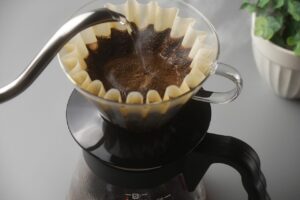
Coffee is extracted with hot water using drip, pour-over, espresso or another conventional method. It is then cooled, poured over ice or brewed directly onto a measured amount of ice.
Hot extraction tends to release aroma and soluble compounds quickly. Rapid chilling can preserve a brighter, more recognizable hot-brew character.
The practical comparison
| Characteristic | Cold brew | Iced coffee | What it means at home |
|---|---|---|---|
| Brewing water | Room temperature or colder | Hot water, followed by cooling | The temperature used during extraction—not the temperature in the glass—defines the method. |
| Preparation time | Commonly around 12 hours, with recipes varying widely | Usually several minutes | Cold brew requires planning; iced coffee can be prepared on demand. |
| Grind | Commonly coarse | Matches the hot brewer, often medium for drip or pour-over | Cold brew’s long contact time makes a very fine grind harder to filter and easier to overdo. |
| Flavor tendency | Mellow, rounded, chocolate-like or low in perceived sharpness | Brighter, more aromatic and closer to the character of hot-brewed coffee | Roast, origin, ratio and filtration can move either drink outside these tendencies. |
| Texture | Can feel heavier, especially with cloth or metal filtration | Often cleaner when prepared through a paper filter | Filter choice can matter almost as much as brewing temperature. |
| Concentrate | Frequently prepared at a strong ratio for later dilution | Usually brewed close to its final drinking strength | Drinking concentrate without checking the intended dilution can create an unexpectedly intense serving. |
| Ice dilution | Can be planned during final assembly | Must be considered in the hot-brew recipe | Randomly adding ice to a normal hot recipe often creates a weak drink. |
| Batch size | Convenient for preparing several servings in advance | Convenient for one immediate serving | Choose according to whether you value preparation ahead or fresh brewing. |
Heat changes the route of extraction
Hot water accelerates the movement of soluble coffee compounds into the beverage. That is why a pour-over can finish in minutes while a cold extraction normally needs hours.
Aromatic, acidic, sweet and bitter compounds begin moving into hot water quickly.
Ice lowers the temperature while becoming part of the recipe through dilution.
Cool water extracts more slowly, requiring extended contact between water and grounds.
The finished liquid may be ready to drink or strong enough to require added water or milk.
Cold extraction is not simply hot brewing performed more slowly. Temperature changes which compounds move efficiently, how aromatic the brew feels and how much coffee is needed to reach a particular beverage strength.
Which one tastes smoother?
Cold brew often softens the edges
Cold brew is commonly associated with cocoa, nuts, caramel, dark fruit and a rounded finish. Lower serving temperature also reduces the intensity with which aroma and sweetness are perceived.
- Works well with milk and simple syrups
- Can make darker roasts feel especially chocolate-like
- May hide delicate floral notes
- Can feel flat when the ratio is too weak
Iced coffee can preserve brightness
Hot extraction can capture fruit, floral and roast aromas that cool water may present less clearly. Brewing directly over measured ice cools the coffee quickly instead of allowing it to sit warm for a long period.
- Useful for light and medium roasts
- Shows citrus and fruit acidity more clearly
- Works well as a fresh single-cup drink
- Can taste weak when ice is treated as an afterthought
“Less acidic” is more complicated than it sounds
A peer-reviewed comparison of hot and cold brews made from the same light-roasted coffees found similar pH ranges. Cold brews, however, showed lower titratable acidity than their hot-brewed counterparts.
pH measures the concentration of hydrogen ions at the time of testing. Titratable acidity reflects a broader amount of acid that can be neutralized. This helps explain how two drinks can have similar pH readings while differing in chemical composition and perceived sharpness.
The result does not prove that cold brew will prevent reflux, stomach discomfort or another medical symptom. Coffee response is individual, and brewing studies cannot substitute for personal medical guidance.
Which one has more caffeine?
Neither method wins automatically. Caffeine in the glass depends on the beans, coffee dose, extraction, concentrate strength, dilution and final serving size.
Cold brew recipes often use substantially more coffee per unit of water than ordinary hot brewing. The intended dilution determines the final drink.
One study comparing drinks at similar dissolved-solids strength found higher caffeine in its optimized cold brew, but that result cannot define every recipe or café serving.
A large iced coffee may contain more total caffeine than a small diluted cold brew even when the concentrate began stronger.
When caffeine intake matters, check the recipe or ask the seller. The FDA notes that caffeine content can vary widely across brewed coffee products and serving sizes.
Two recipes that respect the ice
- Add the coarsely ground coffee to a clean container.
- Pour in the water gradually and stir gently until all grounds are wet.
- Cover the container and steep in the refrigerator or at room temperature for approximately 12 hours.
- Filter carefully through the brewer’s filter, cloth or paper as appropriate.
- Begin serving with one part concentrate and one part water or milk.
- Adjust the dilution before changing the brewing ratio.
- Place 120 grams of ice in a heat-safe server beneath the dripper.
- Rinse the paper filter separately so the rinse water does not melt the recipe ice.
- Add 20 grams of medium-ground coffee.
- Bloom with approximately 45 grams of hot water.
- Pour the remaining hot water in a controlled pattern until the scale reaches 200 grams of added hot water.
- Swirl the server until most of the measured ice has melted, then pour over fresh serving ice if desired.
Calculate a cold-coffee starting recipe
Choose the method and coffee dose. The calculator provides an experimental baseline, not a guarantee of ideal extraction.
Brew the hot water through the coffee directly onto the measured ice.
Choose according to the occasion
A refrigerated batch reduces morning preparation and can be diluted differently for each person.
Hot brewing and rapid chilling can produce a fresh cold drink in approximately the time required for an ordinary pour-over.
Cold brew gives a rounded base, while a concentrated flash brew may preserve more aroma through the additions.
Long cool extraction often presents cocoa, nuts and darker sweetness with less perceived sharpness.
Hot extraction may reveal floral, citrus and fruit characteristics that feel quieter in a conventional cold brew.
Measure the coffee dose, dilution and serving size. The drink name is not enough to estimate the final amount.
Fix the problem without changing everything
| Problem | Likely cause | First adjustment | Method affected |
|---|---|---|---|
| Weak after the ice melts | Ice was added on top of a normal hot-coffee recipe | Count the recipe ice as part of the total brewing water | Iced coffee |
| Harsh and sharply bitter | Grind too fine, excessive contact time or overly dark roast | Grind coarser or reduce steeping time before changing the dilution | Cold brew |
| Flat and lifeless | Weak ratio, old beans or a coffee whose delicate aroma is muted when cold | Increase concentration modestly or try flash-chilling the same beans | Both |
| Muddy texture | Fine particles passed through a metal or coarse filter | Filter again through paper or use a more consistent coarse grind | Cold brew |
| Sharp and sour | Hot brew drained too quickly or used too little hot water | Grind slightly finer while preserving the total water-and-ice amount | Iced coffee |
| Concentrate tastes undrinkable | It was evaluated without its intended dilution | Test several measured dilution levels before changing the brew | Cold brew |
Cold preparation still needs clean equipment
- Use safe drinking water
- Wash the container before brewing
- Keep the brew covered
- Clean reusable filters thoroughly
- Refrigerate the finished beverage
- Add milk close to serving
Cold brew equipment should be washed and rinsed after each use. Coffee oils and particles left in a filter or container can make the next batch taste stale or bitter.
Use clean food-safe containers and follow the instructions supplied with the brewer. Refrigerate the filtered beverage in a covered container rather than leaving a prepared batch on the counter indefinitely.
Milk, cream and homemade sweetened additions introduce their own storage requirements. Keep them refrigerated and discard anything with an unusual odor, appearance or texture.
A two-day test that separates method from preference
Use the same coffee for both drinks. Prepare the cold brew the previous day, then make the flash-chilled coffee immediately before tasting.
Ask another person to label the samples A and B. Taste them first without milk, then add the same amount of milk or sweetener if that reflects how you normally drink coffee.
| Observation | Sample A | Sample B |
|---|---|---|
| Aroma from 1 to 5 | ||
| Sweetness from 1 to 5 | ||
| Perceived acidity from 1 to 5 | ||
| Body from 1 to 5 | ||
| Main flavor noticed | ||
| Would make again? |
Is coffee left to cool automatically iced coffee?
Can cold brew be served hot?
Does cold brew require dark-roasted beans?
Is cold brew concentrate meant to be consumed straight?
The best choice depends on which inconvenience you prefer
Cold brew asks you to plan the drink many hours in advance, filter a batch and decide how it should be diluted. In exchange, it provides convenience over several servings and a mellow profile that works easily with milk.
Iced coffee asks you to brew while you wait and calculate the ice as part of the recipe. In exchange, it preserves more of the immediate aroma and brightness associated with hot extraction.
Choose cold brew when preparation ahead feels easier than morning technique. Choose iced coffee when several minutes of fresh brewing feel easier than maintaining a refrigerated batch. Both can be excellent once the water, coffee and ice are treated as measured ingredients.
Brewing and scientific references
- National Coffee Association — Cold Brew Coffee . Official overview defining cold brew and iced coffee, with equipment, coarse-grind guidance, concentrate ratios, approximate brewing time, filtration and cleaning advice.
- National Coffee Association — Drip Coffee . Official explanation of hot drip extraction, filtration and the practical characteristics of conventional brewed coffee.
- Scientific Reports — Acidity and Antioxidant Activity of Cold Brew Coffee . Peer-reviewed comparison finding similar pH ranges but lower titratable acidity in the tested cold brews than in corresponding hot brews.
- PubMed — Optimization of Cold Brew Coffee and Comparison with Hot Brew . Research examining temperature, ratio, grind, contact time, dissolved solids, caffeine, organic acids and volatile compounds.
- U.S. Food and Drug Administration — Spilling the Beans: How Much Caffeine Is Too Much? . Official guidance noting wide variation in caffeine across brewed coffee products, serving sizes and individual responses.
The external references above were active and accessible during this editorial review. Recipe ratios and brewing times are starting points; coffee, grinder, water, filtration and personal preference may require adjustment.

The Bruxa Coffee editorial team creates practical guides, brewing resources and interactive coffee tools designed to help readers brew better coffee at home. Our content focuses on clear explanations, reliable information and hands-on brewing knowledge for coffee enthusiasts of all experience levels.