
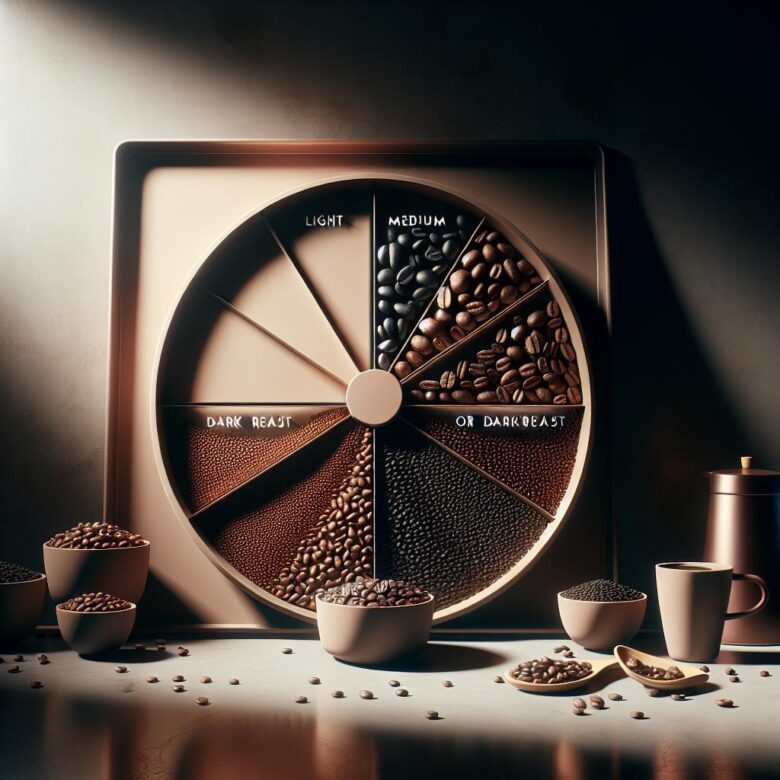
The same coffee bean can taste like jasmine and peach-or like burnt toast-depending on how far it’s roasted. That’s why so many people “upgrade” their beans and still end up disappointed: they’ve been choosing roast level as a proxy for strength, freshness, or quality, when it’s really a dial that reshapes flavor, acidity, sweetness, and even how forgiving the coffee will be to brew.
Light, medium, and dark roasts aren’t just color categories-they’re roasting milestones that change what you’ll pull into the cup. Pick the wrong one for your grinder, brew method, or taste preference, and you can wind up with a sour, thin cup that feels underdeveloped, or a flat, bitter cup where the roast overwhelms origin character. Even great beans can taste mediocre when the roast level fights your palate and your equipment.
This guide breaks down what each roast level actually does (and what it doesn’t), the flavor signals to look for, and how to match roast to the way you drink coffee-espresso, drip, pour-over, French press, or milk-based drinks. If you’ve ever stood in front of a bag that promises “chocolate notes” and wondered why your cup tastes nothing like it, choosing the right roast level is the fastest, most reliable fix.
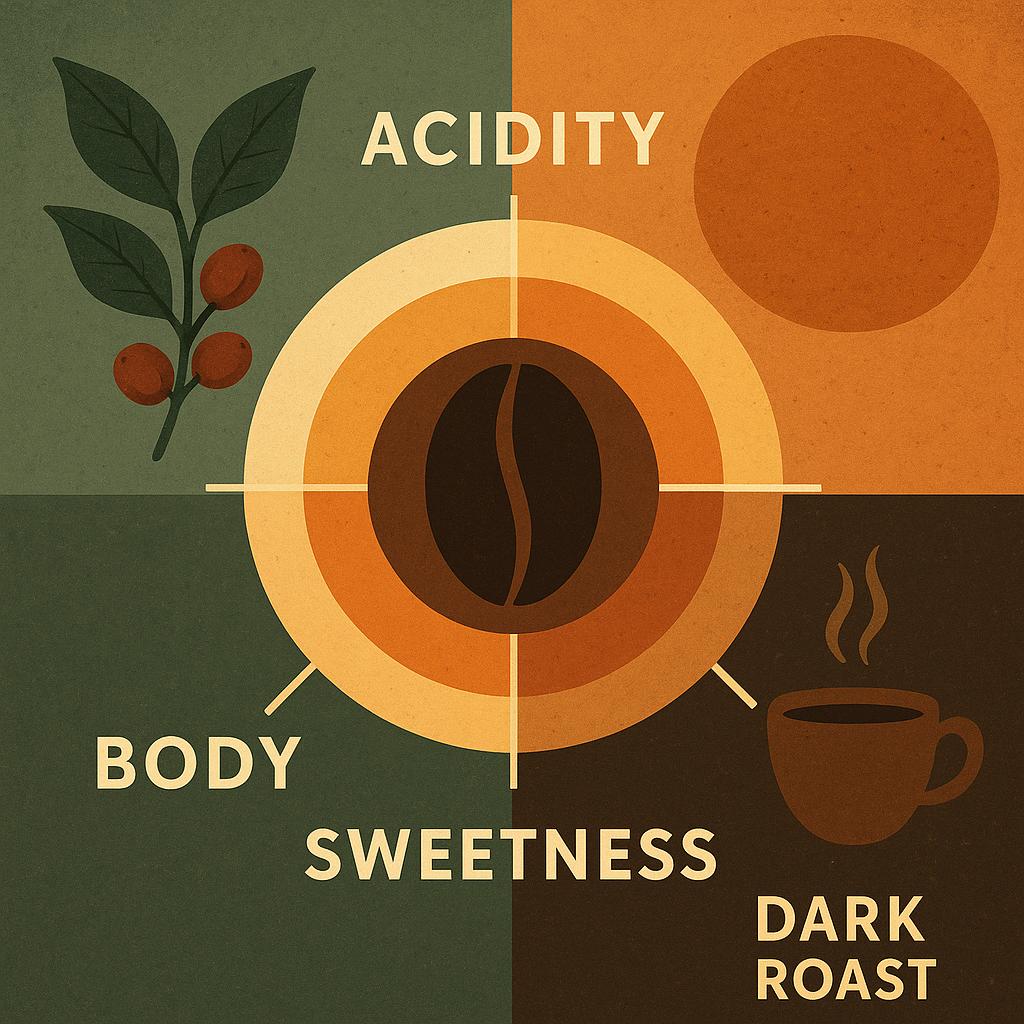
Light vs Medium vs Dark Roast Flavor Map: Acidity, Sweetness, Body, and Aftertaste Explained
Light roasts preserve origin signals: higher perceived acidity, clearer fruit/floral notes, and a clean, quick aftertaste. Sweetness can read like honey or citrus, with a lighter body.
Medium roasts balance brightness and caramelization: rounded acidity, peak sweetness (toffee, stone fruit), and a medium body. Aftertaste tends to be cocoa-sweet and longer.
Dark roasts push roast character forward: low perceived acidity, heavier body, and bitterness that can mask fruit. Sweetness shifts toward molasses and dark chocolate; aftertaste is smokier and more persistent.
- Light: Acidity high · Sweetness medium · Body light · Aftertaste crisp
- Medium: Acidity medium · Sweetness high · Body medium · Aftertaste cocoa
- Dark: Acidity low · Sweetness low-medium · Body full · Aftertaste roasty
- VST CoffeeTools: Eliminates “sour vs bitter” guesswork with extraction metrics.
- Atago PAL-Coffee refractometer: Reads brew strength fast for repeatable comparisons.
Match the Roast to Your Brew Method: Dialing In Espresso, Pour-Over, French Press, and Cold Brew
For espresso, roast choice is really a control knob for solubility and brew ratio. Light roasts need tighter grinding and hotter water to avoid sour shots; dark roasts extract fast and punish over-pulling.
- Espresso: Light-medium for clarity; start near 1:2.2 in 28-32s. Dark for syrupy body; shorten to 1:1.8 in 22-28s.
- Pour-over: Light roasts like higher extraction; grind a touch finer and aim 3:00-3:30. Dark roasts go coarser and faster to dodge bitterness.
- French press: Medium-dark shines with immersion; use coarse grind and extend steeping only until body peaks (typically 4-6 min).
- Cold brew: Medium-dark gives chocolate notes; light can taste thin unless you boost concentration and dilute less.
- Fellow Aiden: Automates pour-over profiles so you can match pulse patterns to lighter roasts without guesswork.
- VST refractometer: Quantifies extraction to quickly see when a light roast needs more yield or a dark roast needs less.
Reading Coffee Labels Like a Pro: Origin, Processing, and Roast Level Signals That Predict Taste
Origin is your first flavor predictor. High-altitude Ethiopia or Kenya often signals floral citrus and brisk acidity. Lower-altitude Brazil or Sumatra usually leans nutty, cocoa, with heavier body.
Processing tells you how sweetness and texture will land.
- Washed: cleaner cup, sharper fruit, easier to taste the farm.
- Natural: louder berry notes, more syrupy, higher variance bag-to-bag.
- Honey: in-between; jammy sweetness with clearer structure.
Roast level is the label’s biggest “taste override.” Practical observations from this year’s workflows show light roasts preserve origin cues but punish stale beans. Dark roasts blur origin, boost bitterness, and favor milk.
Use the roast date, not “best by.” If it’s missing, assume muted aromatics.
- Cropster Roast Profiling: Flags roast development drift fast.
For predictable buying: match washed + light for clarity, natural + medium for sweetness, any + dark for roast-forward comfort.
Buying & Brewing for Peak Freshness: Roast Date, Degassing, Grind Size, and Water Chemistry Tips
Target beans with a clear roast date. For light roasts, my recent brew logs show peak clarity after 7-21 days; darker roasts often peak closer to 3-10 days.
Let coffee degas before chasing “better extraction.” Too fresh can taste sharp and bubbly; too old goes papery.
- Atago PAL-Coffee refractometer: Verifies extraction fast.
Dial grind size by taste, not dogma. If a light roast is sour and thin, go finer or increase contact time. If it’s bitter and drying, go coarser or drop temperature.
Water chemistry is the silent roast selector. Light roasts like slightly higher alkalinity; dark roasts benefit from softer water.
- Aim for 40-80 ppm alkalinity and 50-120 ppm hardness (as CaCO₃).
- Keep brew water around 92-96°C for light, 88-93°C for dark.
Common Questions
- Do I need to rest espresso longer than filter? Usually yes-espresso is more sensitive to CO₂; add 2-4 days to your rest window.
- Why does my dark roast taste ashy? Often over-extraction-use coarser grind, cooler water, or shorter yield/time.
Disclaimer: Adjustments involve hot liquids and pressurized equipment-follow manufacturer safety guidance and consult a pro for equipment-specific issues.
Q&A
1) Does a darker roast have more caffeine than a lighter roast?
Usually, no. Roast level changes flavor more than caffeine. Measured by weight (e.g., 20g of coffee),
light and dark roasts are very similar in caffeine. Measured by volume (e.g., a scoop), light roast often
ends up with slightly more caffeine because the beans are denser; dark roast beans expand and weigh a bit less per scoop.
2) What will I actually taste differently between light, medium, and dark roasts?
Think of roast level as a slider between origin character and roast character:
Light roast highlights floral, citrus, berry, and “sparkly” acidity; medium roast balances
sweetness and body with notes like caramel, chocolate, and stone fruit; dark roast emphasizes roast-driven
flavors-bittersweet cocoa, toasted nuts, smoky or spicy tones-with lower perceived acidity and a heavier finish.
3) Which roast should I choose for my brew method (espresso, drip, French press, cold brew)?
Match roast to the experience you want. For espresso, start with medium to medium-dark for
reliable sweetness and body; go light if you like bright, fruit-forward shots (often needs finer dialing-in
and higher extraction). For drip/pour-over, light to medium showcases clarity and origin notes.
For French press, medium gives richness without tipping into ashy bitterness. For
cold brew, medium to dark tends to produce chocolatey, low-acid comfort-though a medium roast
can keep it sweet without tasting flat.
Wrapping Up: Light, Medium, or Dark Roast: How to Choose Your Perfect Bean Insights
Choosing between light, medium, and dark roast is less about finding the “best” coffee and more about selecting the flavor lens you want to drink through. Light roasts spotlight origin character-floral notes, citrus lift, and distinct acidity-while medium roasts balance sweetness with structure, often delivering caramel, stone fruit, and a rounded finish. Dark roasts trade some origin nuance for roast-driven comfort: deeper bitterness, smoky or chocolate tones, and a heavier body that stands up well to milk.
Expert tip: treat roast selection like a controlled tasting experiment. Buy the same coffee (same origin and processing) in two roast levels-light and medium, or medium and dark-then brew both with the same recipe. Adjust only one variable: grind slightly finer for lighter roasts (to unlock sweetness and aromatics) and slightly coarser for darker roasts (to reduce harshness). Keep notes on three checkpoints: sweetness, acidity, and finish. After two or three rounds, you won’t just “prefer” a roast-you’ll know exactly which flavor cues you’re chasing and how to brew to get them.
Once you’ve mapped your palate, let the season guide you forward: brighter, lighter roasts often sing as iced filter or pour-over in warm months, while medium-to-dark roasts can feel tailor-made for cozy milk drinks and shorter extractions when temperatures drop. Your perfect bean isn’t a fixed destination; it’s a moving target you can steer-one roast, one brew, and one deliberate adjustment at a time.

Linda Ronan Emily is the founder and lead editor of Bruxa Coffee (https://abruxa.com/). With over a decade of experience in the specialty coffee industry, Linda has dedicated her career to exploring the intersection of traditional brewing rituals and modern extraction science.


