Your morning coffee may take only four minutes to brew, but the work behind it can span several years, multiple businesses and thousands of kilometers. Before becoming a roasted “bean,” coffee begins as the seed inside a fruit growing on a tree.
At every handoff, something can be protected, improved, misunderstood or lost. The farmer cannot control how the coffee will eventually be brewed, and the barista cannot repair fruit that was harvested badly. Quality survives only when many separate decisions align.
A journey measured in very different clocks
Coffee moves slowly at the farm and rapidly near the cup. A tree may need years to produce its first commercial crop, while freshly roasted beans can be ground and extracted within minutes.
Ten stops between a seed and a brewed cup
Variety selection and nursery growth
The journey beginsCoffee may begin from seed or, in some production systems, from clonally propagated plant material. Variety choice affects yield potential, disease resistance, plant size, adaptation to local conditions and possible cup quality.
Young plants are commonly raised in nurseries where water, shade, nutrition and pest management can be controlled more carefully than in an open field. Healthy planting material gives a farm a stronger beginning, but it does not remove the need for years of careful management.
Establishing the coffee field
Approximately 3–4 years to fruitNursery plants are transferred to the farm, often during a wet period that helps roots become established. The producer must manage soil nutrition, weeds, shade, pruning, pests and diseases while the trees mature.
The environment shapes what the plant can produce. Altitude, temperature, rainfall, sunlight, soil and farm practices influence the speed at which cherries develop and the chemical composition of the seeds inside them.
Flowering and cherry development
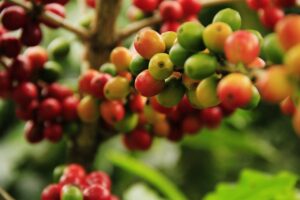
A seasonal cycleCoffee flowers appear after environmental signals such as rainfall. Once pollinated, the fruit develops gradually. Green cherries change color as they mature, although the final ripe color depends on the variety and is not always bright red.
Ripeness matters because sugars, acids and aromatic precursors continue developing inside the fruit. Cherries collected too early can contribute green, astringent or peanut-like characteristics. Fruit left too long may ferment, dry on the tree or become vulnerable to pests and weather.
Harvesting the cherries
One main harvest in many regionsCoffee can be selectively picked, strip picked or harvested mechanically. Selective picking focuses on ripe fruit and may require workers to return to the same trees several times. Strip and mechanical harvesting can collect fruit at different stages of ripeness, making later sorting especially important.
No harvesting method is automatically superior in every landscape. Farm size, terrain, labor availability, variety, climate and intended market all influence what is practical.
Separating the seed from the fruit
Begins soon after harvestFresh coffee cherries are biologically active and can deteriorate when left in uncontrolled piles. Producers therefore begin sorting and processing promptly.
The chosen method determines how much fruit remains around the seed during drying. Natural processing dries the whole cherry. Washed processing removes the skin and pulp before drying the seed in parchment. Honey or pulped-natural methods leave part of the sticky mucilage attached.
Drying and stabilizing the coffee
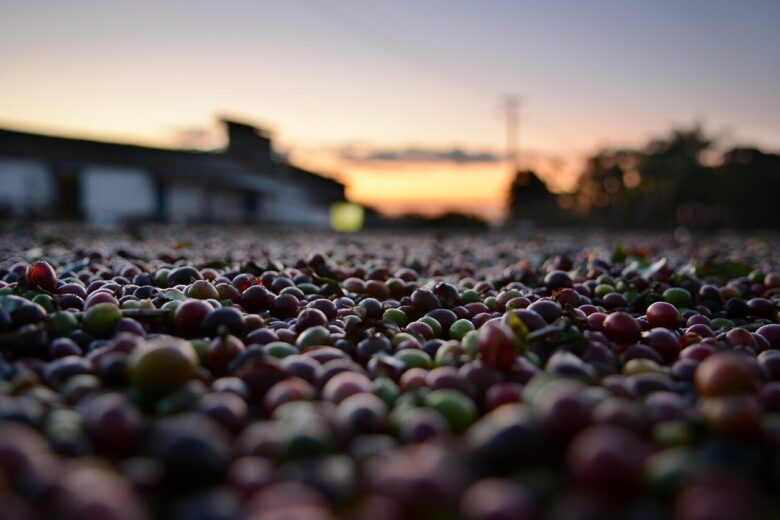
Days or weeksCoffee must be dried to a stable condition suitable for storage. It may be spread on patios, raised beds or mechanical dryers, depending on climate, infrastructure and production scale.
Drying too quickly can create uneven moisture between the outside and center of the seed. Drying too slowly or allowing repeated wetting can increase the risk of mold, fermentation defects and physical damage. Regular turning and protection from rain help the lot dry more evenly.
Dry milling, sorting and preparation for sale
Green coffee stageOnce stable, the dried coffee is hulled to remove parchment or the dried outer fruit. The exposed green seeds can then be sorted by size, density, color and visible defects.
Samples may be roasted and tasted to evaluate the lot. This is where coffee begins receiving a more specific commercial identity: country, region, producer, variety, process, harvest and sensory description.
Exporting, importing and warehousing
Weeks or monthsGreen coffee may pass through cooperatives, mills, exporters, laboratories, ports, shipping companies, importers and warehouses before reaching a roaster.
During this period, coffee must be protected from excessive moisture, heat, strong odors and physical damage. Logistics may not receive the same attention as farming or roasting, yet poor storage can flatten aroma and introduce unwanted flavors.
Roasting the green seeds
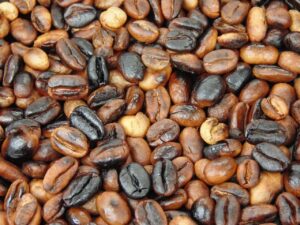
Usually measured in minutesGreen coffee is heated while the roaster controls airflow, energy and time. Moisture leaves the seed, its structure expands and a complex series of reactions creates the familiar brown color and roasted aroma.
The roaster is not adding the entire flavor from nothing. Roasting develops the agricultural and processing potential already present. A lighter profile may preserve more floral or fruit detail, while further development increases roast-led flavors, bitterness and solubility.
Grinding, brewing and serving
The final minutesGrinding increases the coffee’s exposed surface area and releases aroma quickly. The brewer then decides how much coffee to use, how fine to grind it, which water to choose and how long the extraction should continue.
This last stage can reveal the work behind the bean or make it difficult to notice. Stale grinding, unsuitable water, an extreme ratio or an unclean machine may hide a coffee that was carefully protected through every earlier stage.
Three processing paths, three different journeys
The intact cherries dry before the fruit layers are removed. The cup may show fuller body, ripe fruit or fermentation character, although the result depends heavily on fruit quality and drying control.
Skin, pulp and most mucilage are removed before the parchment coffee is dried. This often makes acidity, cleanliness and origin differences easier to notice.
The skin is removed while part of the sticky mucilage remains during drying. The result can sit between the clarity of washed coffee and the fruit intensity of a natural lot.
Processing names describe broad structures, not one universal recipe. Fermentation time, temperature, drying thickness, turning frequency and local terminology can differ substantially between producers.
Where quality can be protected—or lost
| Stage | Helpful decision | Common risk | Possible sign in the cup |
|---|---|---|---|
| Growing | Suitable variety, nutrition, shade and disease management | Stressed or unhealthy plants with uneven fruit development | Limited sweetness, weak seed development or inconsistency |
| Harvest | Prioritize ripe fruit and remove unsuitable cherries | Mixing unripe, damaged and overripe fruit | Astringency, green flavors or uncontrolled fermentation |
| Processing | Clean equipment and controlled timing | Long delays, contamination or poorly managed fermentation | Vinegar-like, rotten, phenolic or excessively fermented notes |
| Drying | Even drying with protection from rain and excess heat | Mold, repeated wetting or internal moisture differences | Mustiness, fading aroma or poor storage stability |
| Storage and transport | Stable conditions and protection from odor and moisture | Humidity, heat, torn packaging or unsuitable warehouses | Baggy, woody, faded or contaminated flavor |
| Roasting | Match development to the coffee and intended brew | Scorching, underdevelopment or excessive roast character | Burnt bitterness, cereal-like sharpness or hidden origin |
| Brewing | Fresh grind, suitable water and repeatable ratio | Stale grounds, uneven extraction or dirty equipment | Sourness, harsh dryness, weak flavor or stale bitterness |
The people hidden inside one ordinary cup
Coffee packaging often highlights the farmer and roaster, but many more people may handle the lot before it reaches a kitchen.
Produce and manage young plants that may remain on a farm for many years.
Maintain trees, pick cherries, transport fruit and perform early sorting.
Manage fermentation, washing, drying, storage and lot separation.
Hull, sort, grade, sample-roast and assess green coffee before sale.
Handle contracts, documents, warehousing, ports and international transport.
Receive green coffee, store it and connect lots with roasters.
Evaluate samples, buy lots, develop roast profiles and package the coffee.
Perform the final transformation from roasted seed to drink.
How to read a bag as a travel document
A detailed package can preserve part of the coffee’s journey. It cannot show every participant, but it can reveal whether the product remained identifiable as it moved through the chain.
Which stage created the flavor you notice?
Set part of the agricultural potential for acidity, aroma, sweetness and seed structure.
Influence sugar development, consistency and the presence of green or overripe fruit.
Can emphasize clean acidity, ripe fruit, fermentation character or heavier texture.
Determines how much freshness and aromatic potential survive the period before roasting.
Develops aroma, sweetness, bitterness, solubility and the balance between origin-led and roast-led flavors.
Controls the strength and balance of what is finally dissolved into the drink.
Your role begins after the longest part is already over
By the time a bag enters your kitchen, most of the journey cannot be changed. You can still protect the final stage and avoid wasting the work that came before it.
A smaller fresh bag usually preserves more value than a large package left open for months.
Protect roasted coffee from repeated exposure to air, heat, moisture and strong surrounding odors.
Whole beans retain aromatic character better than coffee ground long before use.
A stable coffee-to-water ratio helps you distinguish a brewing problem from the character of the beans.
Strong chlorine taste, extreme hardness or unsuitable mineral composition can mask the coffee.
Old coffee oils can add stale bitterness to an otherwise carefully produced cup.
Does coffee always contain two beans inside each cherry?
Is hand-picked coffee automatically better?
Does a natural process mean the coffee is unprocessed?
Can a skilled roaster fix defective green coffee?
The cup is the final handoff, not the whole story
Coffee becomes familiar only near the end of its life. For most of the journey it is a tree, a cherry, a parchment-covered seed or a green agricultural product.
What appears effortless in the morning is the result of repeated decisions: which variety to plant, when to pick, how to ferment, when to stop drying, how to store, when to ship, how to roast and how to brew.
Understanding that chain does not require romanticizing every bag or assuming that a higher price is always fair. It simply makes the cup more honest. Coffee is not created by one machine at the end of the route. It arrives carrying every stage that came before it.
Editorial references
- National Coffee Association — Lifecycle of Coffee . Overview of nursery growth, the three-to-four-year period before fruiting, harvesting, processing and roasting.
- National Coffee Association — Coffee Processing Methods . Detailed explanation of natural, washed and honey or semi-washed processing, including drying and sorting.
- World Coffee Research — Resources for Coffee Nursery Management . Good-practice resources covering seed production, nurseries, plant health, genetics and nursery-business management.
- World Coffee Research — About the Coffee Varieties Catalog . Explanation of how variety, environment, altitude, soil nutrition, weather, tree age and farm management affect yield, quality and plant health.
- Specialty Coffee Association — Exporting: Systems Map . Educational resource focused on the export stage within the green-coffee supply chain.
- Specialty Coffee Association — Coffee Value Assessment . Framework recognizing sensory characteristics alongside information such as origin traceability, processing and certifications.
The external references above were active and accessible during this editorial review. Production systems vary by country, climate, farm structure and intended market, so the stages described here represent a practical general journey rather than one compulsory route for every coffee.

The Bruxa Coffee editorial team creates practical guides, brewing resources and interactive coffee tools designed to help readers brew better coffee at home. Our content focuses on clear explanations, reliable information and hands-on brewing knowledge for coffee enthusiasts of all experience levels.